



If you are leading a medical startup, are you more likely to succeed if you are driven by purpose or financials? This is a common question, and one I’ve watched play out firsthand over a 30-year career.
I’ve been fortunate enough to have worked alongside hundreds of promising MedTech startups over the years and watched as some went on to succeed, and others unfortunately failed. Many were led by purpose-driven entrepreneurs. Others were driven by more hard-nosed businesspeople. But is there a correlation between the success of a startup and the dominant motivation of its leader? Which one wins, purpose or profit?
The power of leading with purpose
Leaders driven by purpose tend to be more deeply connected to their customers. They understand the clinical problem intimately, which means they’re solving a real need, not a perceived one. That depth of insight keeps them focused on delivering a genuinely effective clinical solution.
Purpose alone is not enough
However, some purpose-driven leaders feel uncomfortable, even guilty about focusing on money. As a result, they neglect the commercial side of their business, and that can lead to big problems. If you don’t have enough petrol in the tank, i.e. the funding and resources to execute your vision, you will ultimately fail. Unfortunately, I’ve seen many promising startups come undone for exactly this reason.
Too focused on money leads to problems
On the flipside, I’ve also met leaders who are just in it for the money. Their eyes are on one prize, the financial exit. From day one, they’re thinking about cashing out. In my experience, these leaders tend not to be the successful ones. They’re too transactional. They burn out as the journey gets longer and harder. They don’t persevere. They never really understand their customers, the patients, or the problem they’re actually solving. These entrepreneurs treat their venture like a real estate play, always looking to flip rather than build. When someone’s pure end goal is to sell, that’s often a red flag.
So, does that answer the debate? Purpose wins? Not quite.
The best leaders master both
The leaders I most consistently see succeed are driven by purpose, but they also nail the commercial side of their business.
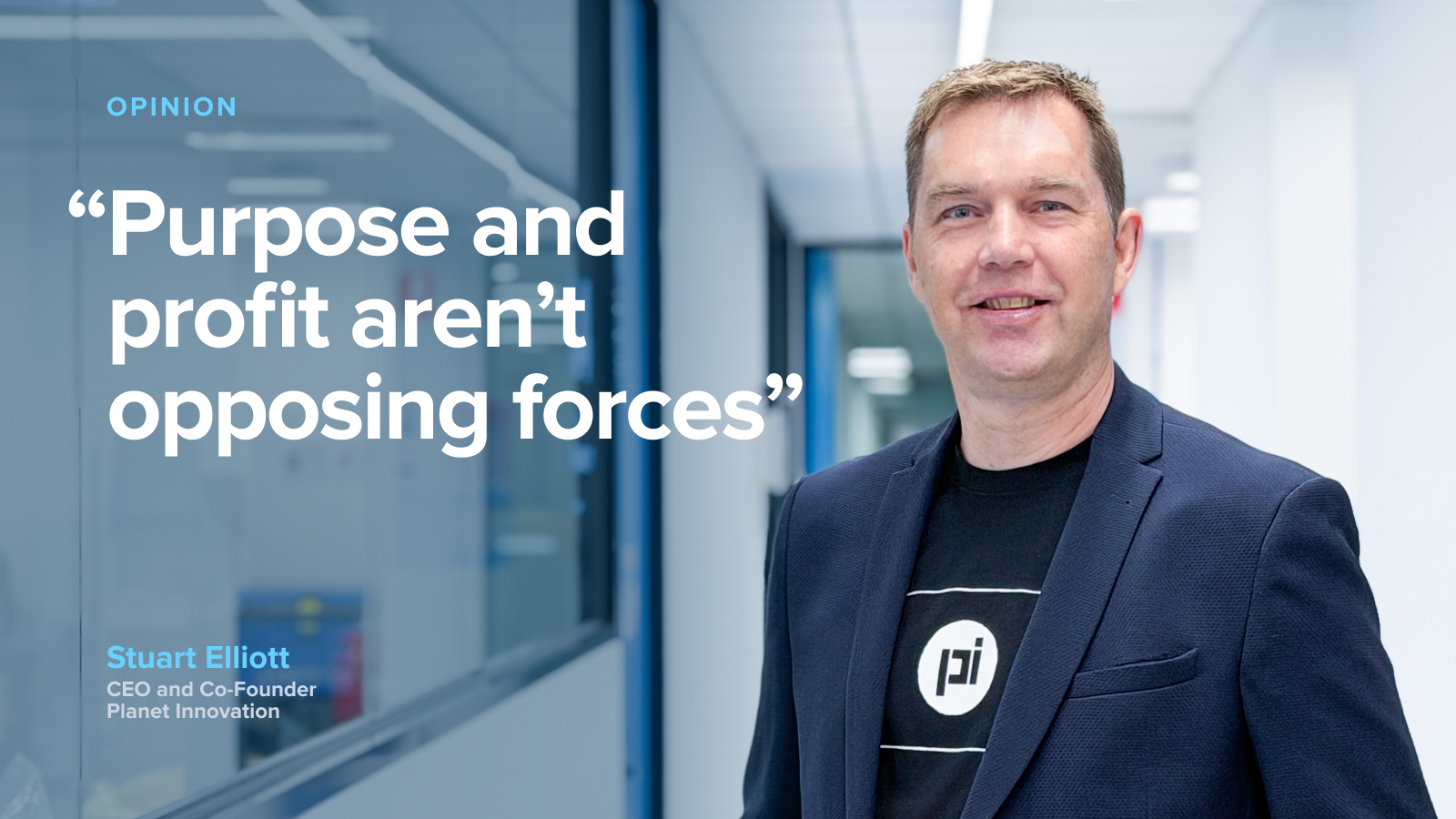
Purpose and profit aren’t opposing forces. In my experience, getting that balance right is what separates the businesses that make it from those that don’t.
When an entrepreneur’s goal is to solve a fundamental healthcare problem, they tend to develop a deep understanding of what the market truly needs, and that naturally leads to building a better business. They’re not obsessing over exit valuations from day one. But, and this is important, they still take capital, business model and unit economics seriously. Purpose without commercial discipline is just passion. You need both.
Being able to raise capital is key
A hallmark of commercially savvy entrepreneurs is that the moment they close a capital raise, they start planning the next one. Less disciplined leaders, often those most deeply focused on purpose, wait until they’ve burned through 80% of their cash before they even start thinking about it.
They become so consumed with building a product that saves lives that they lose sight of the runway beneath them.
I’ve seen many well-intentioned founders left having to validate and commercialize their product on a shoestring because they didn’t raise enough when they had the chance. That leads to shortcuts, which leads to an immature product hitting the market before it’s ready. And then, despite the best of intentions, they fail.
Know your buyer, not just your patient
Beyond capital, a commercially balanced leader must also validate their business model, and that starts with absolute clarity on who their customer actually is. In healthcare, the payer is rarely the patient or the clinician. Patients and doctors may influence the decision, but they seldom write the cheque. Yet I see many entrepreneurs investing heavily in voice of customer work around clinical need, while leaving their voice of payer studies until far too late in the journey. To answer the fundamental question of commercial viability, you need to know exactly who your buyer is, what they’re prepared to pay, and what reimbursement pathway you need to navigate. Get that wrong, and even a genuinely great product can fail in the market.
Unit economics will make or break you
The third commercial consideration is unit economics. Understanding what it actually costs to run a profitable business. You may have raised capital and confirmed your product can generate revenue, but that’s not the same as running a sustainable operation. First-time entrepreneurs often underestimate this.
Take a simple example: if your cost of goods is $1,000, you’ll likely need to sell that product for two to three times that figure once you factor in all your operating costs. Yet many early-stage founders without a strong commercial background assume they can manufacture at $1,000, sell at $1,500, and turn a profit. The reality is that math doesn’t work and the consequences are compounding. Poor unit economics don’t just hurt cash flow; they also make it significantly harder to attract investment. A double hit that has sunk many otherwise promising startups.
It’s worth remembering that even the most purpose-driven employees will stop showing up if they’re not being paid. Profitability isn’t a distraction from your mission, it’s what keeps the mission alive.
How to get the balance right
My advice to a purpose-driven entrepreneur who lacks commercial experience is straightforward: either develop those skills quickly, or find a partner whose strengths complement your weaknesses.
There’s no shame in being the person focused on solving the clinical problem. But if that’s you, don’t just hire a bookkeeper. Bring in a strong CFO who can own the commercial agenda. The Board has a role to play here too. One of its core functions is assembling a leadership team with the right balance of skills and commercial rigour.
Let me close with one final mistake I see often. Founders tend to think sequentially and focus on purpose and product first, then switch to commercials once the clinical need is proven. I always push back on this. You have to run both tracks in parallel. Because if you run out of money on the journey, you won’t get the chance to prove out anything at all.
We have a winner. A healthy balance of both.
On the spectrum of purpose versus profit, the most successful entrepreneurs I’ve met have a healthy dose of both. They are genuinely driven to improve the lives of patients, and at the same time, they are unapologetically focused on profitability from day one.
Ultimately, it is the commercial success of your business that enables the purpose-driven impact so many of us aspire to create.